
Behind Every Protection Gap Is a Human Gap
By Min Hung Cheng 9 September 2026 In risk resilience work, it is easy for human consequences to become technical categories. Loss becomes a number.

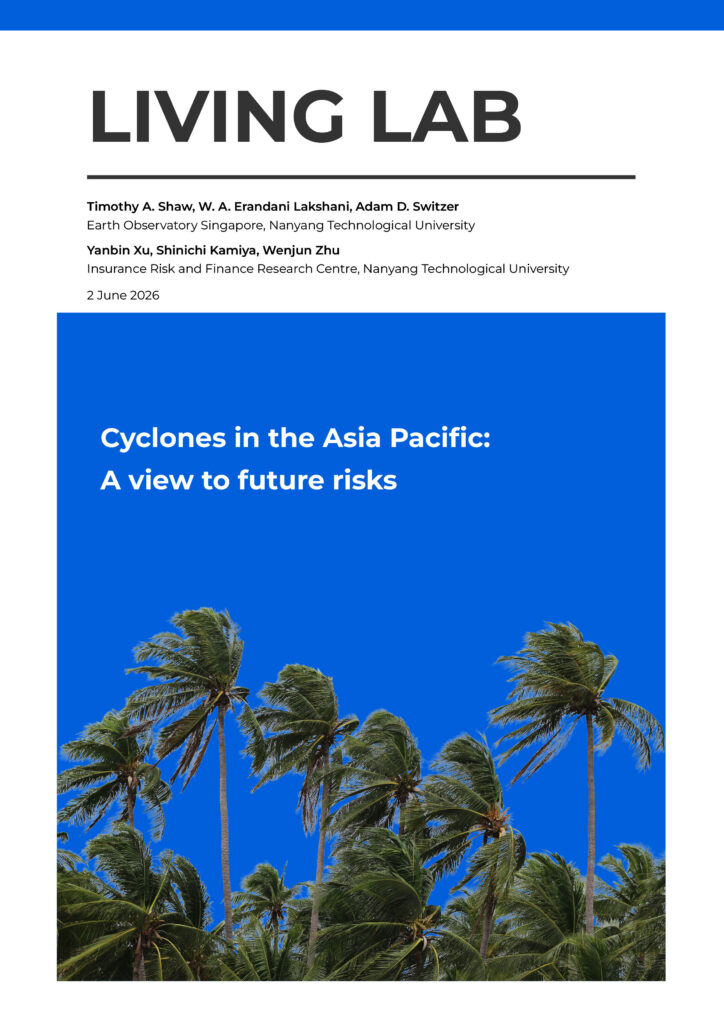
Tropical cyclones are among the most destructive weather phenomena, causing considerable loss of life, damage to property and infrastructure, and economic impact every year. Climate change adds further complexity, as rising ocean and air temperatures may affect the physical characteristics of tropical cyclone formation, intensity, rainfall, tracks and coastal impacts.
As part of the Global Asia Insurance Partnership's Living Lab, this paper examines how tropical cyclone risk in the Asia Pacific may evolve under climate change. It brings together current scientific understanding of tropical cyclone behaviour, observed cyclone activity, future climate projections, and a regional risk assessment framework to develop an indicative view of future cyclone risk for selected markets in East and Southeast Asia.
This is the second paper from our study on the impact of rising sea levels on urban centres in Southeast Asia, undertaken in collaboration with our key academic partner, Nanyang Technological University. We hope this paper highlights the importance of forward-looking risk modelling and discusses broad implications for the insurance industry, regulators and other risk stakeholders.
Authors: Timothy A. Shaw, Erandani Lakshani, Adam D. Switzer, Yanbin Xu, Shinichi Kamiya, Wenjun Zhu
By Min Hung Cheng 9 September 2026 In risk resilience work, it is easy for human consequences to become technical categories. Loss becomes a number.

[2 September 2026], Singapore — The Global Asia Insurance Partnership (GAIP) today announced a strategic partnership with Cathay Life Insurance Co., Ltd. (Cathay Life), which
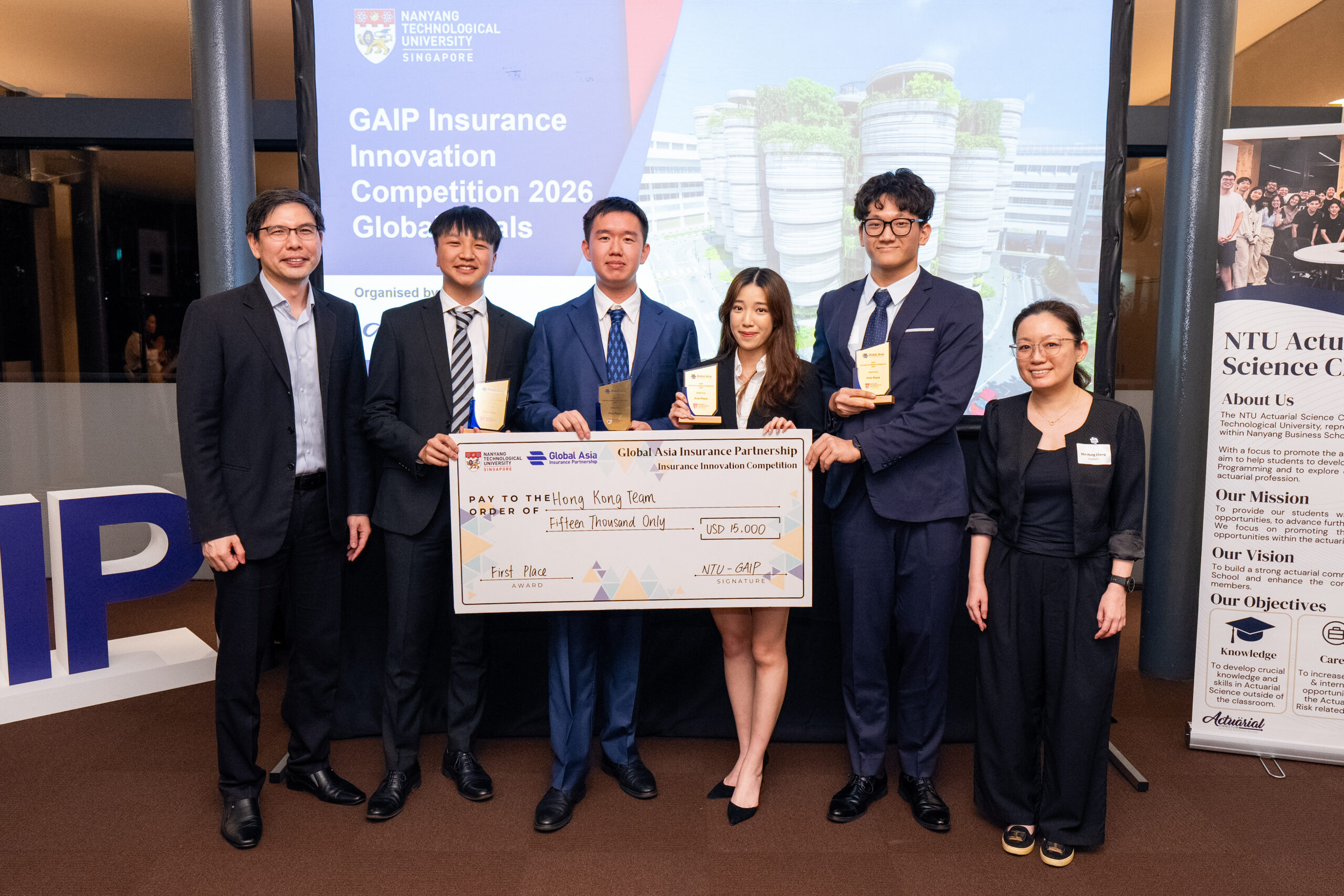
[24 August 2026], Singapore — Team Hong Kong from the Hong Kong University of Science and Technology emerged as the winner of the Global Asia
By Min Hung Cheng 23 July 2026 When faced with a complex risk issue, we often say that we should “go back to first principles.”

By Min Hung Cheng 21 April 2026 Across Asia, health is a central priority of many governments. Over the past decades, much effort has gone